
Pumping · Equipment
Using a breast pump
Which type of pump suits which job, how to tell if your flange size is right, and how to keep your pump kit clean.
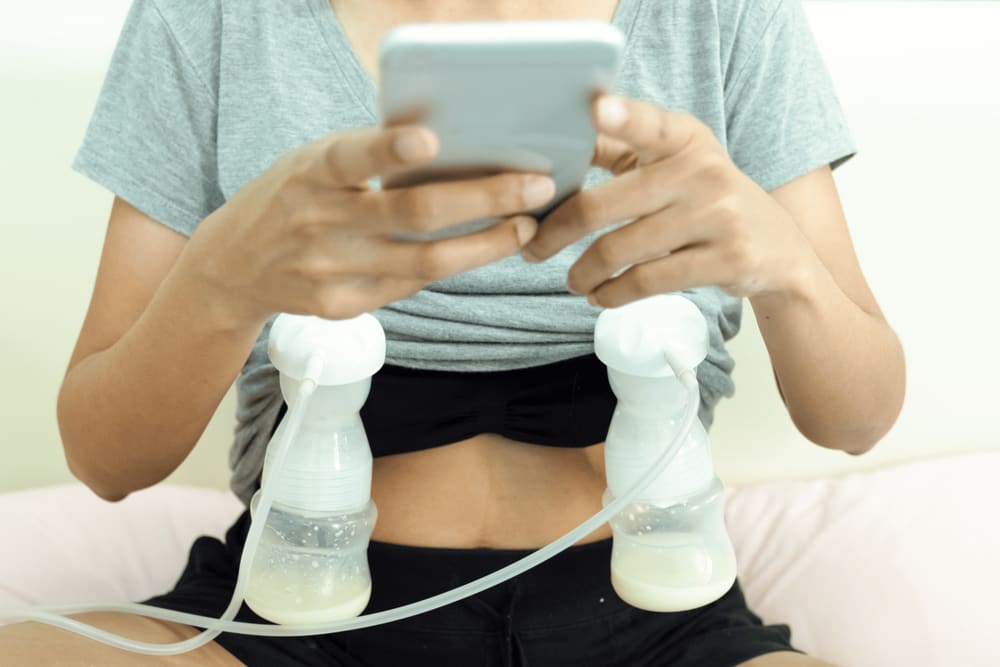
Plenty of mothers breastfeed without ever using a pump. But when you need one, it’s a genuinely useful tool.
The common reasons:
- To establish a supply when you’re separated from your baby after birth — a preemie, or a baby in the NICU
- To increase a low supply
- To maintain your supply when you’re away — returning to work or school
- Because you’ve chosen to pump and bottle-feed rather than feed at the breast
Which pump for which job
Pumps vary a lot, and the right one depends mostly on how much pumping you’ll actually be doing.
Hospital-grade double electric. The best way to establish a supply when you’re separated from your baby after birth. Expensive to buy but available to rent, and 15 minutes of pumping is usually enough. Well suited to long-term pumping with a baby who can’t nurse, or to exclusive pumping. Medela and Ameda are the two big names.
Double electric or battery. Varies in strength — some are as strong as a hospital-grade pump, though strength isn’t labeled. Typically 15 to 20 minutes for both breasts at once. Good for maintaining a supply when you’re back at work or school. Medela, Ameda, Spectra, Lansinoh, Motif Luna.
Small double electric or battery. Usually not as strong as a full-size double electric. Plan on about 20 minutes, and know it isn’t ideal for exclusive pumping — supply may drop. Shorter lifespan than a larger pump, too.
Hands-free double electric. Especially convenient if you can’t step away to pump — they can be programmed to start when you’re ready, and nobody around you needs to know. Less effective for long-term or exclusive pumping. Willow and Elvie are the common brands.
Single pump. Easy to keep in the diaper bag, 20 to 30 minutes for both sides. Good for the occasional need — running errands, coffee with a friend. Not ideal for maintaining a supply if you’re pumping often. Medela’s Harmony and the Elvie Curve are examples.
Haakaa-type silicone pumps. A soft one-piece pump you can use on the opposite breast while nursing — apply it and let it sit, or use it as a single pump. It doesn’t always drain the breast well, so it won’t maintain a supply on its own.
Flange fit
The right flange size prevents pain, skin trauma, plugged ducts, and reduced supply or flow.
Two things worth knowing up front: your size may change over the course of pumping, and you may well need a different size for each breast. Nobody tells mothers this, and it’s behind a surprising amount of pumping pain.
- Start with a flange — look at the tunnel — slightly wider than the base of your nipple.
- Center your nipple in the tunnel. Use suction that feels like a strong tug but isn’t painful, or the highest comfortable setting.
- Nipples usually enlarge while you pump, so check the fit again after a few minutes.
A good fit. Your nipple moves freely in the tunnel and isn’t rubbing the sides. No redness, no discomfort, and your nipple and areola aren’t turning white.
You need a smaller flange. Your nipple and too much areola are being pulled into the tunnel. You may have discomfort or skin trauma.
You need a larger flange. Your nipple is rubbing along the sides of the tunnel. It may blanch or turn white, and you may have discomfort or skin trauma.
Get more from each session
A pump on its own is only doing part of the job. Adding massage, compression and hand expression makes each session meaningfully more productive — and your body answers by making more.
Read the full hands-on pumping routine →
Cleaning your pump
The CDC’s fact sheet is the clearest guide we’ve found, and worth printing for the kitchen: How to keep your breast pump kit clean (PDF).
Please reach out.
If you have questions or concerns about this, or simply want to talk it through, we're glad to. Every consult — in-home, clinic or virtual — starts with listening.
Schedule a consult